
Most patients who undergo an exosome-based procedure notice early changes within about 2 to 6 weeks, with fuller effects continuing to build over 2 to 4 months as the body's own repair processes respond (Lee et al., 2021; Zhong et al., 2024). In published studies of exosome-based skin procedures specifically, visible changes are typically reported around 4 to 6 weeks, with continued improvement through 12 weeks and beyond (Proffer et al., 2022; Park et al., 2023).
Results are not immediate. Exosomes are thought to work by signaling your own cells to repair and remodel tissue, which is a gradual biological process rather than a mechanical fix.
Timelines vary by the area addressed, the product used, and the individual patient. It is worth stating plainly up front: exosome products used outside FDA-approved clinical trials are investigational, and no exosome product is currently FDA-approved for any medical or cosmetic use (U.S. Food and Drug Administration, 2019). Any timeline described here is a general pattern, not a guarantee.
Why Exosome Results Build Slowly
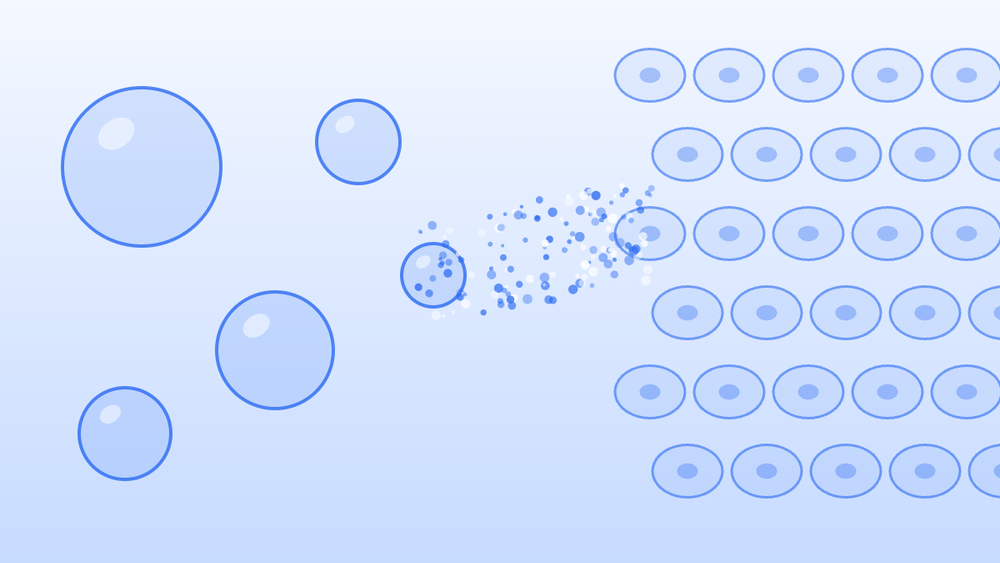
Exosomes are tiny particles released by cells, including mesenchymal stem cells, that carry proteins, lipids, and genetic material used for cell-to-cell communication (Zhong et al., 2024). When exosome products are introduced into the body, the idea is that this cargo signals nearby tissue to increase its own repair activity.
That process unfolds in phases: an initial signaling response over the first few weeks, followed by a longer remodeling phase over the following months. A patient expecting an immediate, dramatic change is likely to be disappointed even if the underlying biology is doing what it is supposed to do.
In clinical studies of exosome-assisted skin rejuvenation, participants typically noticed early changes a few weeks in, including better hydration and smoother texture, with fuller results emerging over two to three months as collagen remodeling progressed (Park et al., 2023). One six-week study of a topical platelet-derived exosome product found measurable improvement in photodamage and skin-aging scores by weeks 4 to 6 (Proffer et al., 2022).
Because most protocols involve a short series of sessions spaced several weeks apart, the final result is usually judged a few months after the first visit, not days after.
Timeline by Procedure Type
The single most common reason patients get confused about timing is that they are comparing notes on very different procedures. Target tissue, dosing, and delivery all differ, and so does the timeline. The windows below come from a mix of early clinical reporting and the tissue-remodeling biology described above, not from a single definitive study.
- Skin-focused procedures. Initial hydration and texture changes often appear within 1 to 2 weeks, with more visible change by 6 to 8 weeks as collagen-related processes continue.
- Joint and musculoskeletal procedures. Initial change more often shows up around 4 to 6 weeks, with continued change out to 3 to 4 months.
- Hair-focused procedures. These move slowest, because hair growth cycles themselves are slow. Meaningful change is rarely assessed before 3 months, with fuller assessment closer to 6 to 9 months.
A follow-up visit at an appropriate interval, rather than judging results too early, is part of a reasonable plan.
Who May Be a Candidate
Exosome-based procedures are most often explored by adults seeking skin rejuvenation, including improvement in fine lines, texture, tone, or post-procedure recovery. Some patients are also interested in hair restoration or joint-focused options.
Reasonable candidates are generally adults who understand that exosome products are investigational, have realistic expectations about a gradual timeline, and are in good general health.
Exosome-based procedures may not be appropriate for:
- People who are pregnant or nursing
- People with active skin infections or certain immune conditions
- People with an uncontrolled autoimmune condition or an untreated malignancy in the area being addressed
- People with a known allergy to donor-derived biologic products
- People with a history of cancer
- People who expect a guaranteed or immediate outcome
Candidacy is also use-specific. Being a reasonable candidate for a joint-focused procedure does not automatically make someone a reasonable candidate for a skin- or hair-focused one, since target tissue, dosing, and delivery all differ. Other considerations may apply, and only a licensed physician can determine whether any option is reasonable for you.
How Clinicians Evaluate You
A responsible evaluation starts with:
- A medical history and medication review
- A focused examination of the area of concern
- A review of prior imaging or lab work where relevant
- A candid discussion of your goals and what has already been tried
For skin concerns, clinicians assess baseline photodamage, laxity, pigmentation, and prior procedures. Standardized photography is often used so that gradual changes over weeks can actually be measured rather than guessed at. Clinical studies track outcomes the same way, using imaging and validated scoring at set intervals such as 4, 6, and 12 weeks (Park et al., 2023).
For musculoskeletal complaints, a thorough evaluation typically includes a targeted exam and, when appropriate, diagnostic ultrasound or a review of MRI findings to identify which structure is actually involved. Pain does not always point to its own source.
Part of a thorough evaluation is disclosure. You should be able to ask exactly what product is being used, where it is sourced from, and its regulatory status — FDA-cleared, FDA-approved, or investigational — and get a straight answer. A clinic that will not answer that question directly is a signal to seek a second opinion.
Available Options
Exosome products are used in several ways. The most common is applying them topically after microneedling or laser resurfacing for skin rejuvenation. Exosome-based procedures are one option among several, not the only one.
Conventional, well-established alternatives exist for nearly every goal exosomes are marketed for:
- FDA-approved neuromodulators and dermal fillers
- Laser and energy-based resurfacing
- Microneedling alone
- Prescription retinoids
- For hair loss, FDA-approved medications such as minoxidil and finasteride
- For musculoskeletal concerns, physical therapy, guided corticosteroid injections, platelet-rich plasma (PRP), surgical evaluation, or continued observation
A balanced consultation should compare these mainstream options, many with decades of safety data, against investigational exosome approaches (Mayo Clinic, n.d.) — including the option of doing nothing and monitoring — rather than presenting exosome therapy as the only path forward.
Benefits, Limitations, and Risks
Benefits
Early human studies suggest exosome-assisted procedures may improve skin texture, elasticity, hydration, and pigmentation more than comparison procedures, with good short-term tolerability (Al Shammrie et al., 2025). The proposed mechanism is support for the body's own regenerative signaling; cell proliferation, reduced local inflammation, and new blood vessel formation have all been described in laboratory and early clinical research (Lee et al., 2021). That is different from a proven, guaranteed clinical outcome in humans.
Limitations
The limitations are real. Studies are mostly small, short, and use widely varying products. Because these products are not FDA-approved, there is no standardized dosing, manufacturing process, or quality benchmark across providers, so results from one clinic or product do not necessarily transfer to another. Results cannot be guaranteed and may differ from published findings.
Risks
The risks deserve equal attention. The U.S. Food and Drug Administration (2019) has reported serious adverse events, including infections, in patients who received unapproved exosome products, and warns that no exosome product has been reviewed or approved. Local injection-site reactions and allergic response are also possible.
A 2021 CDC and FDA investigation documented bacterial infections in patients who received unapproved, donor-derived biologic products marketed similarly to exosome therapy, tracing contamination to the manufacturing process itself rather than the administering clinic (Hartnett et al., 2021). That case involved umbilical cord-derived products rather than exosomes specifically, but it illustrates a risk shared across unregulated biologics: sourcing and manufacturing quality matter as much as the procedure itself.
What the Evidence Shows
What the Evidence Establishes
Current evidence does establish that some exosome-containing topical products, combined with microneedling or laser resurfacing, produced measurable skin improvements within 4 to 12 weeks in small controlled studies (Park et al., 2023; Proffer et al., 2022). A 2025 systematic review of human studies found consistent short-term improvements in scarring, aging measures, and hyperpigmentation (Al Shammrie et al., 2025).
Evidence also establishes that mesenchymal stem cell-derived exosomes carry bioactive cargo capable of influencing cell behavior in laboratory and animal models, and that early-phase human trials have been registered, and in some cases completed, for applications such as wound healing and inflammatory conditions (Lee et al., 2021).
What the Evidence Does Not Establish
This is equally important (U.S. Food and Drug Administration, 2019; U.S. Food and Drug Administration, n.d.):
- There are no FDA-approved exosome therapies for any condition
- Long-term durability data are limited
- Injected and IV exosome uses remain unproven
- Head-to-head comparisons against established options are scarce
- Large-scale, controlled human trial data proving consistent clinical benefit across broad populations do not yet exist
Researchers note that standardized dosing, manufacturing, and potency testing are still being worked out before the field can move to larger controlled trials (Zhong et al., 2024). In plain terms: the biological mechanism is genuinely promising and actively studied, but it has not been proven the way an FDA-approved drug's effectiveness has been proven.
Recovery and Next Steps
After a typical microneedling-with-exosomes session, expect redness and mild sensitivity for one to three days. After an injection-based procedure, mild soreness or swelling at the site can occur for a few days, similar to other injection-based procedures. Most patients resume normal daily activity quickly, though a clinician may recommend limiting strenuous joint use for a short period.
Most skin protocols involve two to four sessions spaced three to four weeks apart, with progress photos along the way. A practical timeline to keep in mind for skin: early changes around weeks 3 to 6, clearer results by weeks 8 to 12, and a final assessment about three months after the last session. If you see no change by then, that is a reasonable point to revisit the plan with your physician.
Orlando Considerations
Florida's year-round sun exposure matters here. UV damage works directly against the collagen remodeling these procedures aim to support, so daily broad-spectrum sunscreen and sun avoidance during the healing window are especially important for Orlando patients.
Florida does not require a separate state license category solely for administering exosome products. Any clinician performing these procedures in Orlando is still bound by standard Florida medical licensure and scope-of-practice rules, plus the same federal FDA framework that applies nationwide. Location does not change a product's federal regulatory status.
Florida has also been an active market for regenerative medicine clinics, which makes provider selection critical. Verify that any clinic offering exosome procedures is physician-led, transparent about the investigational status of these products, and candid about sourcing, regardless of how a practice markets itself locally.
Frequently Asked Questions
How soon will I see results from exosome therapy?
In published skin studies, early improvements appeared around 3 to 6 weeks, with fuller results by 8 to 12 weeks (Proffer et al., 2022; Park et al., 2023). Joint-focused procedures more often show initial change around 4 to 6 weeks, and hair-focused procedures are rarely assessed before 3 months. Individual timelines vary.
Is it normal to see no change at all in the first two weeks?
Yes. Exosome-based procedures work through a gradual biological signaling process, so many patients do not notice change until several weeks in.
Why do results take weeks instead of days?
Exosomes are being studied as cell-signaling messengers that may encourage your own cells to repair tissue and build collagen — processes that unfold over weeks, not overnight (Mayo Clinic, n.d.).
Does a longer wait mean a better result?
Not necessarily. Individual biology, the specific product used, and the tissue targeted all affect timing, and a slower initial response does not reliably predict a better final outcome.
Does a faster result mean the product is more concentrated or effective?
Not reliably. These products are not standardized or FDA-approved, so quality varies by manufacturer, and a faster subjective response is not a validated marker of quality.
How long do exosome therapy results last?
Long-term data are limited. Some reports describe improvements sustained for many months, but durability has not been firmly established. The underlying effect is not permanent tissue replacement, and many patients see it diminish over months to a couple of years, so maintenance sessions are often suggested.
Is exosome therapy FDA approved?
No. There are currently no FDA-approved exosome products for any medical or cosmetic use (U.S. Food and Drug Administration, 2019).
Does exosome therapy hurt?
The exosome application itself is typically painless. Most discomfort comes from the accompanying procedure, such as microneedling or an injection, and usually resolves within days.
References
Al Shammrie, F. F., Alhemshy, L. Z., Althawy, M. M., Alfaraj, M. M., Alotaibi, A. S., Alali, D. S., Alsaggaf, O. H., Alhamashi, L. Z., & Albelowi, L. M. (2025). The efficacy of MSC-derived exosome-based therapies in treating scars, aging and hyperpigmentation: A systematic review of human clinical outcomes. Reports, 8(4), 268.
Hartnett, K. P., Powell, K. M., Rankin, D. A., Gable, P., Kim, J. J., Spoto, S., Schaefer, I. M., Halpin, A. L., McAllister, G., Wilson, C., Peacock, G., Kuehnert, M., & Basavaraju, S. V. (2021). Investigation of bacterial infections among patients treated with umbilical cord blood-derived products marketed as stem cell therapies. JAMA Network Open, 4(10), e2128615.
Lee, B.-C., Kang, I., & Yu, K.-R. (2021). Therapeutic features and updated clinical trials of mesenchymal stem cell (MSC)-derived exosomes. Journal of Clinical Medicine, 10(4), 711.
Mayo Clinic. (n.d.). Beyond stem cells, regenerative medicine finds exosomes. Mayo Clinic News Network.
Park, G. H., Kwon, H. H., Seok, J., Yang, S. H., Lee, J., Park, B. C., Shin, E., & Park, K. Y. (2023). Efficacy of combined treatment with human adipose tissue stem cell-derived exosome-containing solution and microneedling for facial skin aging: A 12-week prospective, randomized, split-face study. Journal of Cosmetic Dermatology, 22(12), 3418–3426.
Proffer, S. L., Paradise, C. R., DeGrazia, E., Halaas, Y., Durairaj, K. K., Somenek, M., Sivly, A., Boon, A. J., Behfar, A., & Wyles, S. P. (2022). Efficacy and tolerability of topical platelet exosomes for skin rejuvenation: Six-week results. Aesthetic Surgery Journal, 42(10), 1185–1193.
U.S. Food and Drug Administration. (2019, December 6). Public safety notification on exosome products.
U.S. Food and Drug Administration. (n.d.). Consumer alert on regenerative medicine products including stem cells and exosomes.
Disclaimer: This article is for educational purposes only and does not constitute medical advice. Exosome products offered outside of FDA-approved clinical trials are investigational and are not FDA-approved to diagnose, treat, cure, mitigate, or prevent any disease or condition. Individual results vary and cannot be guaranteed.
Always consult a licensed physician to discuss whether any option is appropriate for you.
Medically reviewed by Kenny Chantasi, DO. Last medically reviewed: August 29, 2026.
Related reading
- Exosome Cellular Infusion Complete Guide
- What Is Exosome Therapy?
- Are Exosomes FDA Approved? What Patients Should Know
- Does Microneedling With Exosomes Actually Work?
More questions answered on the PrimeCell patient blog, or see frequently asked questions.
Related services at PrimeCell
PrimeCell is a physician-led practice in Orlando. Candidacy for any procedure is determined at an in-person evaluation.
Ready when you are
Talk with a physician about your options
Have questions about whether this is right for you? Book a consultation with Dr. Chantasi, or call the clinic and we'll talk it through.
Orlando, FL · Mon–Fri 10am–6pm